SARS Crypto Tax Letters: What To Do If You Receive One
The South African Revenue Service has begun issuing crypto tax audit letters and crypto tax evasion letters. Find out what to do if you receive one. 🇿🇦
SARS is sending letters to South African taxpayers about undeclared crypto, often asking them to confirm if they’ve reported their holdings and gains.
Letters are not tax assessments but signals that SARS has data on crypto transactions and may follow up with audits or penalties if you ignore them.
You must respond within 21 days, usually by confirming disclosure, correcting returns, or using the Voluntary Disclosure Programme (VDP) to limit penalties.
Keep detailed records and get help. Accurate transaction histories and advice from a crypto accountant are essential.
What are the SARS crypto tax letters?
The South African Revenue Service (SARS) began issuing letters to crypto investors back in 2024 after establishing its so-called ‘Crypto Unit’ focused on increasing tax compliance for crypto assets. SARS has sent out two types of crypto letters so far:
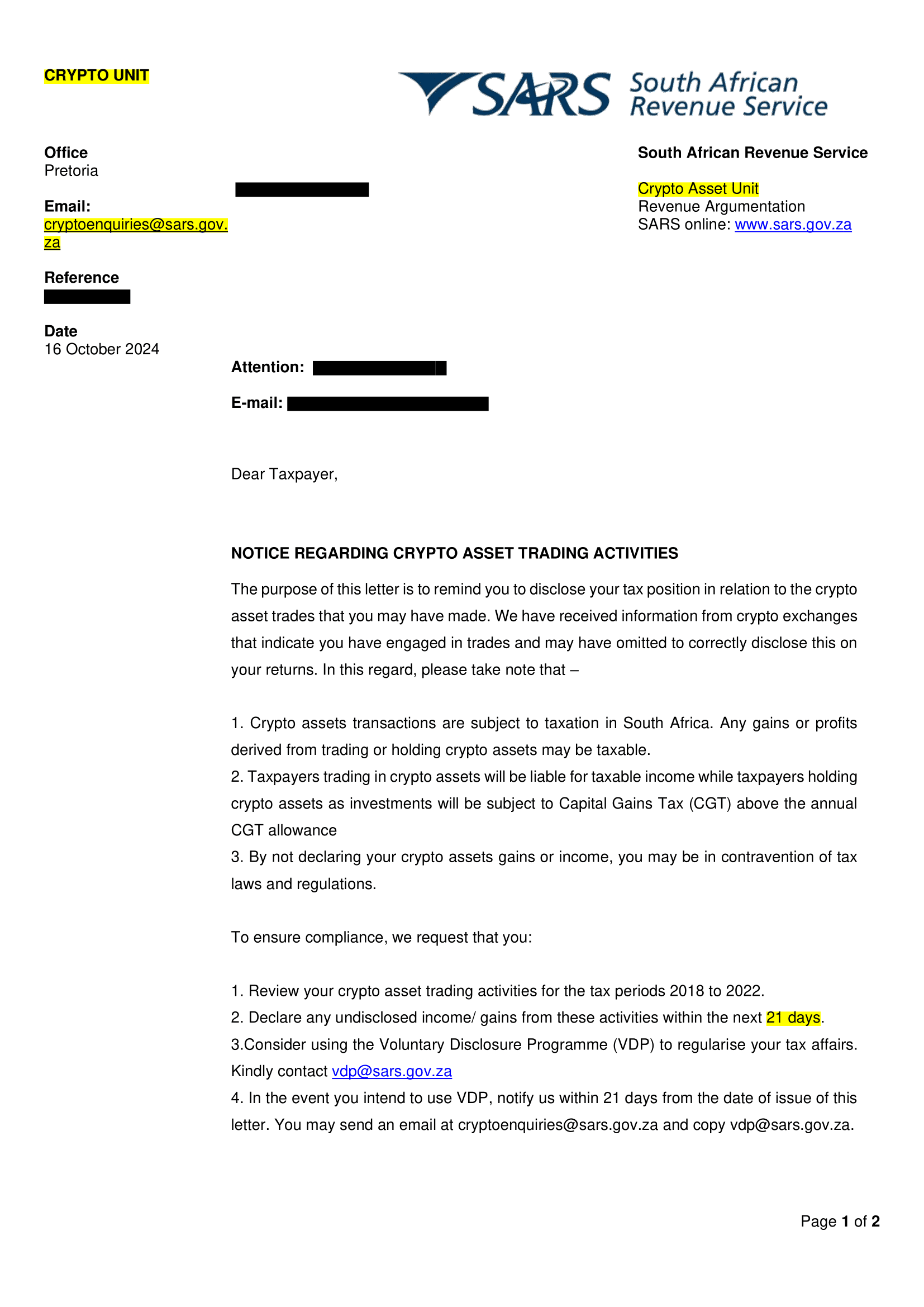
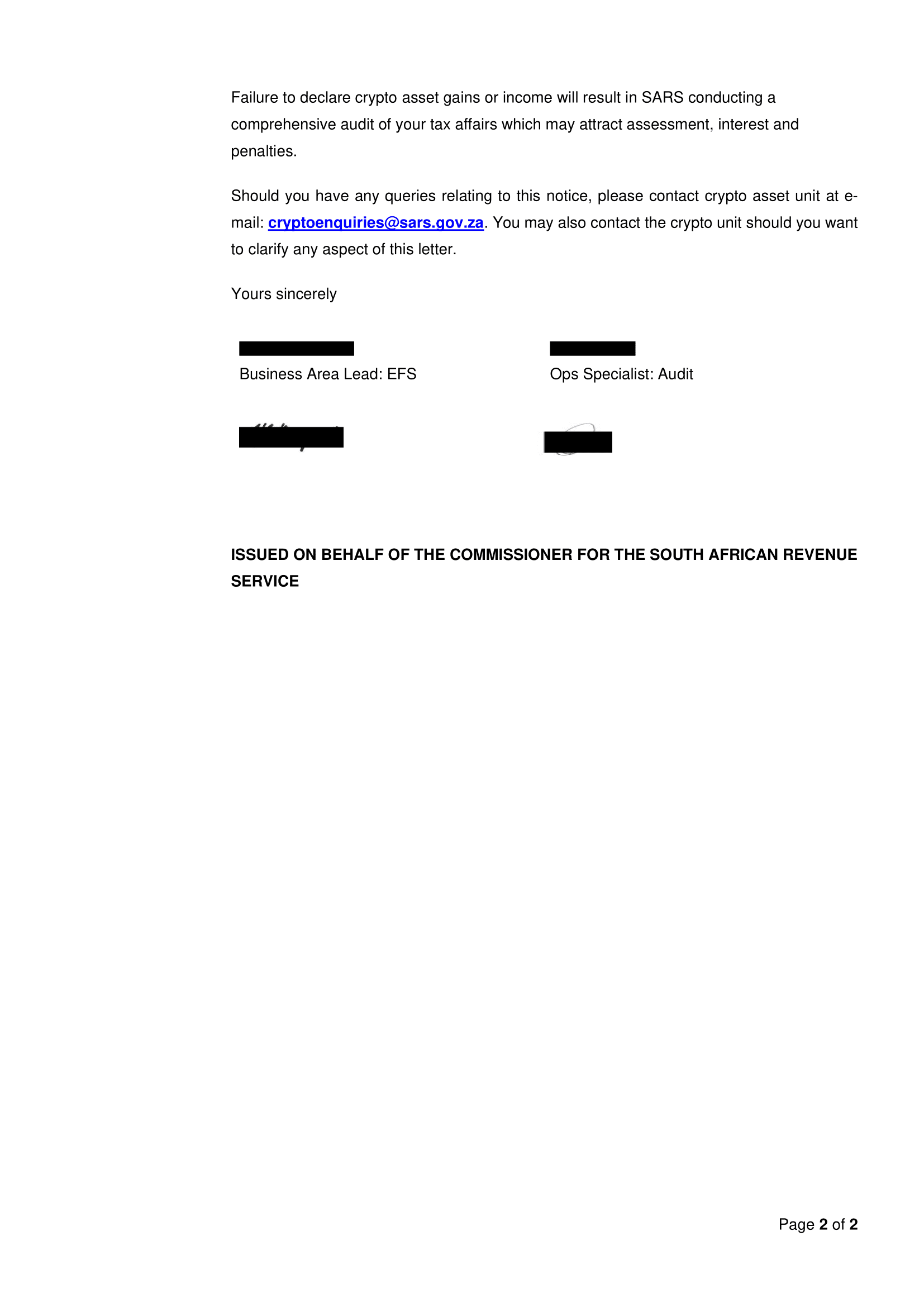
The first is a notice regarding crypto asset trading activities. This letter states its purpose is to remind taxpayers to disclose their crypto asset trades. It reiterates that crypto is subject to taxation in South Africa and that SARS has information from a crypto exchange that indicates the investor has engaged in trades without disclosing this on their return.
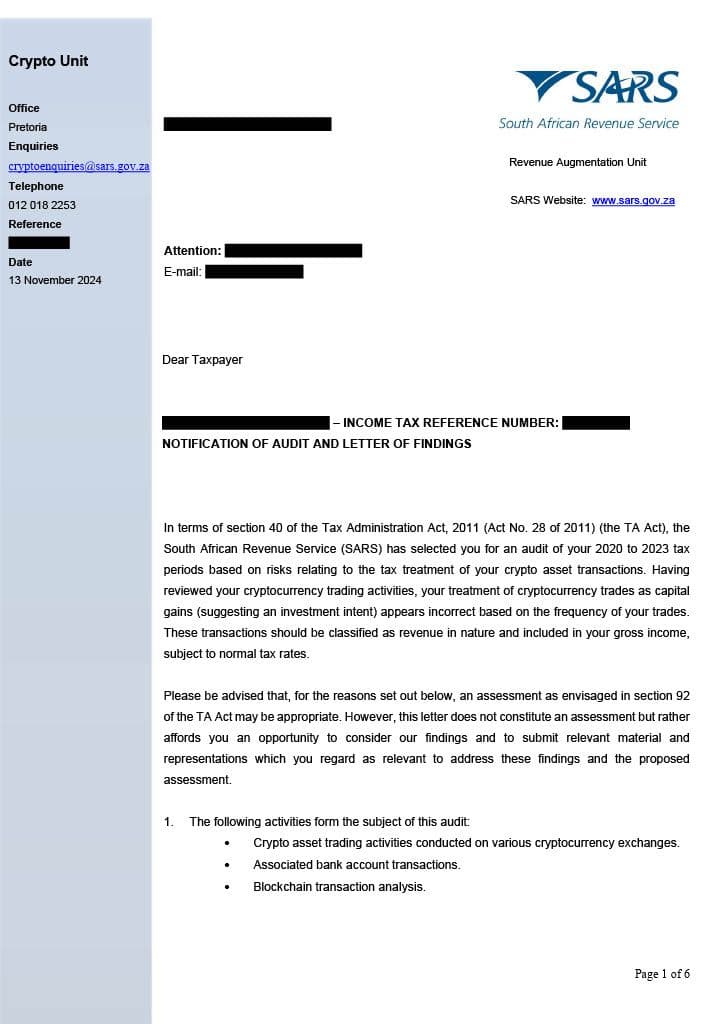
The second is a notification of a proposed audit and a letter of findings. This letter may highlight issues with how crypto has been reported (capital vs. revenue in nature) and “affords” the investor the opportunity to consider the findings and submit materials that may help address the proposed assessment or make any voluntary adjustments. This SARS crypto letter gives a taxpayer 21 days to respond.
Let’s take a look at each in more depth and what you can expect and do if you receive one.
SARS Crypto Unit: Notice Regarding Crypto Asset Trading Activities Letter
You can read the letter in full below, but in summary, the key points include:
The purpose of the letter is to remind the South African taxpayer to disclose their tax position in relation to crypto transactions.
The letter confirms SARS is receiving information on users from crypto exchanges. As such, any taxpayer whom SARS has received information on who has omitted this information from a previous tax return may receive the same letter.
The letter reminds taxpayers that crypto transactions are subject to tax in South Africa and that failing to declare taxable gains or income is an offense.
The letter requests the taxpayer review their crypto trading activities for a given time period and declare any undisclosed income or gains within 21 days. It highlights the potential use of the voluntary disclosure program (VDP).
Failure to declare gains or income may result in an audit.
SARS Crypto Unit: Notification of Audit and Letter of Findings
You can read the key points of the letter below, but in summary, the highlights include:
The letter states the taxpayer has been selected for an audit for a given time period in relation to crypto asset transactions.
Transactions may be classified as revenue in nature as opposed to capital gains, and this may have sparked the audit.
Interestingly, it also states that receiving this letter does not constitute an assessment in itself, but that an assessment may be appropriate.
Your activities that have formed the subject of the audit will be highlighted, including but not limited to your trading activities, associated bank account transactions, and blockchain transaction analysis.
The letter also outlines the law surrounding the tax treatment of cryptocurrencies in South Africa, including highlighting where revenue may be capital gains vs. income, reminding the taxpayer that the burden of proof is on them, and stating the understatement penalties and criminal offenses that may occur in relation to tax evasion.
The letter will then include a table summarising the proposed adjustments to your tax return(s).
You have 21 days to respond to the notice, and you're given a direct contact at the SARS Crypto Unit.
Who will receive a crypto tax letter from SARS?
Anyone whom the SARS believes to be avoiding crypto taxes or who they think has previously avoided crypto taxes may receive a letter.
What should I do if I receive a SARS crypto tax letter?
It very much depends on your personal circumstances and the letter you receive. You have 21 days to respond to either letter.
If you receive a notice regarding crypto asset trading activities, and you know you’ve failed to disclose crypto trading activities previously, you can utilize the voluntary disclosure program to declare your transactions. Equally, if you’ve had crypto transactions but haven’t declared them because you believe they are non-taxable (for example, if you’ve only bought and held crypto and not disposed of it), then you should contact the SARS to explain this - but be prepared to provide records.
If you receive a notification of audit and a letter of findings, you should speak to a qualified crypto accountant to help you navigate this. This is particularly pertinent if your notice includes any findings around gross income vs capital gains, as the law surrounding this in South Africa is complex and can substantially increase your tax bill.
How Koinly can help
You can use Koinly to collate records of your crypto transactions going back as far as you’ve traded to provide evidence for the SARS in relation to your crypto trading activities, as well as to calculate any previously unreported gains or income. Learn more about crypto tax in South Africa or sign up to Koinly to calculate your crypto taxes.