
What is an IDO in Crypto?
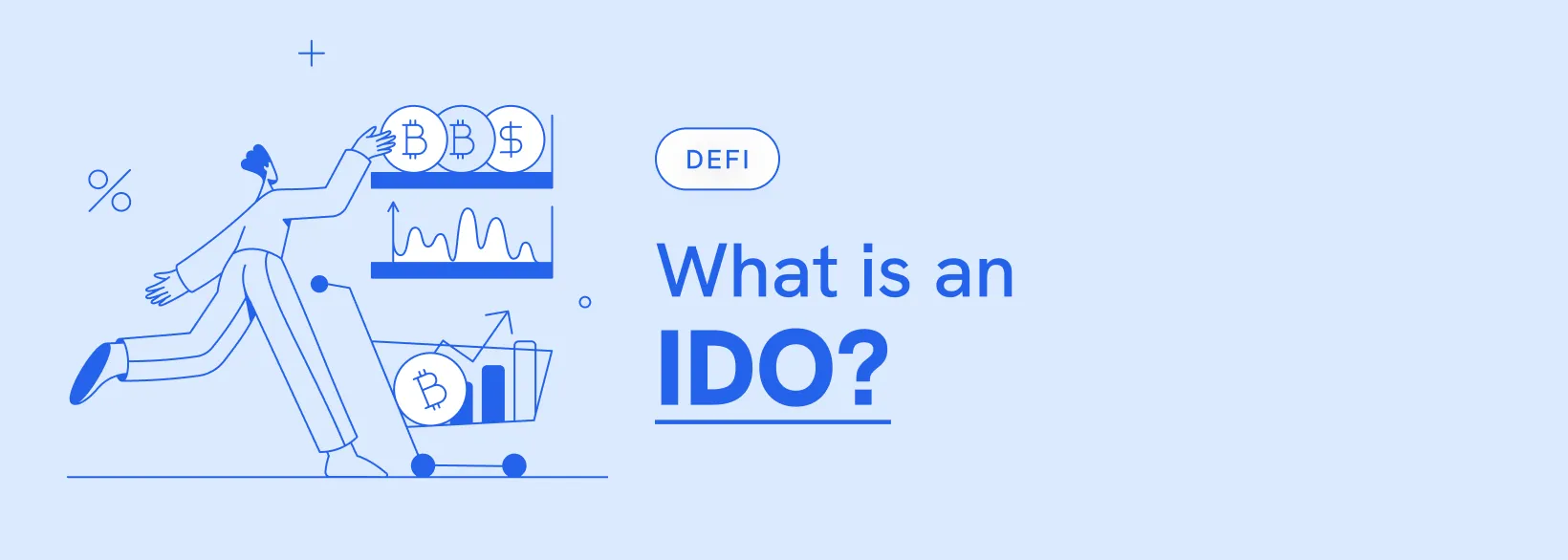
An Initial DEX Offering (IDO) lets a project raise funds by launching its token on a DEX. Here’s what you need to know about IDOs, how they work, and where to find upcoming IDOs.
What is an Initial DEX Offering (IDO)?
An Initial DEX Offering, or IDO, is a fundraising event where a crypto project launches its new token through a decentralized exchange.
Instead of selling tokens through a centralized crypto exchange, the project uses a DEX or an IDO launchpad and smart contracts to handle the sale. Investors typically connect a self-custody wallet, commit tokens (i.e., USDT, ETH, SOL), and receive the new tokens according to the terms of the sale.
An IDO can also provide the initial liquidity needed for the token to start trading. A portion of the funds raised may be paired with the new token in a liquidity pool, allowing investors to buy and sell it on the DEX shortly after launch.
This is one of the main differences between an IDO and older token fundraising models like ICOs. With an ICO, the project generally conducts the token sale itself. With an IDO, the token sale and initial trading take place through decentralized infrastructure.
What is an IDO launchpad?
You’ll often hear about IDOs and launchpads together. An IDO launchpad is a platform that helps crypto projects conduct their token sale. Launchpads can screen projects, organize the sale, determine who can participate, and help provide liquidity.
Launchpads can provide some additional screening, but this shouldn't be confused with a guarantee that a project is legitimate or will succeed. Investors still need to research the project themselves.
How does an IDO work?
While every IDO is slightly different, it usually looks something like this:
1. A project applies to a launchpad
The project first needs to arrange its token launch. If it is using a launchpad, the platform may review the project, team, tokenomics, smart contracts, and other information before accepting it.
The amount of due diligence varies significantly between platforms, so being featured on a launchpad shouldn't automatically be treated as an endorsement.
2. The IDO is announced
Once the launch is arranged, the project and launchpad announce details such as:
The IDO date and time
The token price
The number of tokens available
The maximum allocation per participant
Which blockchain and wallet are supported
Vesting or token-unlock schedules
Eligibility requirements
This is also when you'll usually find out whether the sale uses a whitelist, lottery, or another allocation system.
3. Investors qualify for the sale
Popular IDOs can attract far more buyers than there are tokens available.
To manage demand, launchpads may use whitelists, lotteries, or tiered allocation systems. Some require participants to hold or stake the launchpad's native token, while others may have different eligibility requirements.
4. Investors commit their funds
If you're eligible, you'll connect your self-custody wallet to the launchpad and commit the required cryptocurrency during the subscription period. The exact asset you'll need depends on the IDO. It could be a stablecoin such as USDC or USDT, or the native token of the blockchain hosting the sale.
5. Tokens are distributed
Once the sale is complete, successful participants receive their allocation of the new token.
You might not receive all the tokens you requested. If an IDO is oversubscribed, your allocation can be reduced depending on the launchpad's rules.
Some projects also use a vesting schedule, meaning you don't receive your entire allocation immediately. Instead, tokens are released over a set period.
6. The token starts trading
One of the defining features of an IDO is that the token can begin trading on a DEX shortly after the launch. The project can provide liquidity by pairing its new token with another cryptocurrency in a liquidity pool. Once trading opens, the token's price is determined by trading activity in the pool.
This can create significant price movements in either direction, particularly when the initial supply available for trading is small.
What are the benefits of an IDO?
IDOs have become a popular way for crypto projects to distribute tokens because they remove some of the barriers involved with centralized token launches.
Immediate liquidity: One of the biggest advantages is that an IDO can provide liquidity almost immediately. Rather than waiting for a centralized exchange to approve and list a token, the project can create a liquidity pool on a DEX and allow trading to begin shortly after the sale.
Lower barriers for projects: IDOs reduce some of the costs and requirements associated with centralized listings, which gives smaller or newer projects a way to raise funds and distribute tokens to a crypto-native audience.
Self-custody: IDOs generally use self-custody wallets rather than requiring investors to deposit funds with a centralized exchange.
Potentially earlier access: IDOs can give investors access to tokens at an early stage, before they're available across the wider crypto market. But this cuts both ways; early-stage projects are also among the riskiest parts of the crypto market.
Transparent on-chain transactions: Because IDOs use blockchain transactions and smart contracts, parts of the sale can be independently verified on-chain.
What are the risks of an IDO?
The opportunity to buy into a project early is also what makes IDOs risky. You're often investing in a project before it has a proven product, established user base or long trading history.
Scam and rug-pull risk: Anyone can create a crypto token, and decentralization doesn't automatically make a project trustworthy.
Extreme price volatility: New tokens can experience huge price swings immediately after launch.
Low liquidity: Immediate trading doesn't necessarily mean good liquidity. If only a small amount of the token is available in a liquidity pool, a relatively small trade can move the price significantly. Low liquidity can also make it difficult to exit a large position without pushing the price down.
Token unlocks and dilution: Don't just look at the number of tokens being sold in the IDO. You also need to understand the project's overall token supply.
Smart contract risks: IDOs rely heavily on smart contracts. A vulnerability or coding error could potentially result in lost funds or tokens.
Oversubscription: Popular IDOs can attract far more demand than the number of tokens available. You might therefore spend time completing the eligibility requirements and still receive a very small allocation, or none at all.
IDOs vs. ICOs
IDOs and ICOs both involve crypto projects raising funds by selling tokens, but the way the sales are conducted is different.
| IDO | ICO | |
|---|---|---|
| Stands for | Initial DEX Offering | Initial Coin Offering |
| Where it takes place | DEX or IDO launchpad | Usually directly through the project |
| Intermediary | DEX/launchpad and smart contracts | Usually the project itself |
| Trading after launch | Can begin on a DEX shortly after the sale | Depends on whether and where the token is subsequently listed |
| Access | Often uses whitelists, lotteries or eligibility requirements | Varies by project |
| Risks | Smart contracts, scams, volatility, liquidity and token unlocks | Scams, regulatory issues, project failure and token volatility |
ICOs were particularly prominent during the 2017–18 crypto boom. They allowed projects to raise capital directly from investors through token sales, but the model attracted significant criticism because of scams, market manipulation, and limited investor protection.
IDOs were developed partly as an alternative to this model, using decentralized exchanges and automated smart contracts rather than relying on the project to conduct the entire sale itself.
How do I participate in an IDO?
The exact process depends on the launchpad, but it's usually something like this:
Research the project. Check the whitepaper, team, product, tokenomics, funding, roadmap, smart contract audits, and community. Don't rely solely on the launchpad's description.
Find the official launchpad. Go through the project's verified website or official social channels rather than clicking links from random accounts.
Check eligibility. Look at the countries supported, KYC requirements, wallet requirements, and any minimum holding or staking requirements.
Set up a compatible wallet. You'll generally need a self-custody wallet that supports the relevant blockchain.
Fund your wallet. Make sure you have the cryptocurrency required for the sale, plus enough to cover network fees.
Complete the IDO requirements. This could mean joining a whitelist, entering a lottery, staking tokens, or completing another eligibility process.
Participate during the sale window. Connect your wallet and commit the amount you want to invest. Double-check the contract address and transaction details before approving anything.
Claim your tokens. Depending on the IDO, tokens may be distributed automatically, or you'll need to claim them manually.
Where can I find upcoming IDOs?
Launchpads are one of the most direct places to find upcoming IDOs. They typically publish information about upcoming projects, including sale dates, allocation rules, and eligibility requirements.
Different launchpads support different blockchains and projects, so there isn't one universal platform covering every IDO. Some good options to explore include:
CoinMarketCap also has an ICO calendar that tracks upcoming, ongoing, and completed crypto fundraising events, including IDOs. The calendar can be useful for discovering projects and checking the status of upcoming token sales.
However, a listing on a calendar or launchpad isn't an endorsement of the project. You still need to research the token and verify the official sale details.
As with any highly speculative crypto investment, only put in money you're prepared to lose.
Don’t forget the tax bill…
Crypto IDOs are taxable! Generally, it’ll be viewed as a crypto-to-crypto trade at the point you exchange your tokens for the new token. You can learn more in our guide to crypto taxes, or sign up for Koinly and let it calculate your taxes for you.